What is route optimization in logistics?
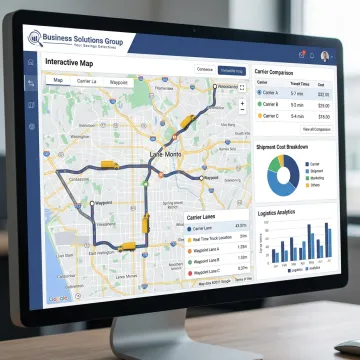
Route optimization in logistics is the process of selecting the most efficient way to move shipments based on factors like cost, transit time, carrier performance, capacity, service requirements, and delivery constraints. Modern software automates these decisions using rules, analytics, and real-time data so businesses can reduce manual planning, improve consistency, and lower transportation spend across parcel, LTL, FTL, and other shipping modes.
What does route planning and optimization software do?
Route planning and optimization software helps businesses choose the best shipping routes, modes, and carriers for each order or shipment. It can automate least-cost routing, compare service options, improve load and order planning, provide shipment visibility, and support compliance. Many platforms also connect with ERP, WMS, and accounting systems to centralize transportation decisions and reporting.
How can route optimization software reduce transportation costs?
The software reduces costs by identifying lower-cost routing options, improving carrier selection, minimizing unnecessary accessorial charges, and increasing planning consistency. It can also reveal billing errors, service mismatches, and inefficient shipping patterns through analytics and audit tools. When paired with advisory support, businesses often gain better contract alignment and stronger control over day-to-day freight decisions.
Can route optimization software work across multiple shipping modes?
Yes. Many route optimization platforms support parcel, LTL, FTL, air, ocean, and rail shipments within one transportation workflow. This allows businesses to compare options across modes, apply routing rules consistently, and improve visibility from planning through delivery. Multi-mode support is especially valuable for companies managing diverse shipping profiles or balancing cost and service requirements across networks.
Is route optimization software suitable for small and mid-sized businesses?
Yes. Small and mid-sized businesses can benefit significantly because software reduces manual planning work, improves shipment decisions, and provides clearer cost visibility without requiring a large internal logistics team. Solutions can be scaled to match shipping volume and complexity, and some offerings are structured to be self-funded or paired with savings opportunities that improve return on investment.
What features should I look for in route planning software?
Key features include least-cost routing, carrier comparison, real-time shipment visibility, analytics dashboards, audit capabilities, compliance controls, and integrations with ERP or WMS platforms. Businesses should also look for configurable business rules, reporting that highlights savings opportunities, and support for the shipping modes they use most. Strong implementation and advisory guidance can also improve adoption and results.
How long does it take to implement route optimization software?
Implementation timelines vary based on system complexity, integrations, shipping modes, and data readiness, but many projects begin with discovery, workflow mapping, and configuration before moving into testing and rollout. Businesses with cleaner data and simpler requirements can move faster, while multi-system environments may take longer. A structured implementation plan helps reduce disruption and speeds time to value.
Do I need consulting support along with route optimization software?
Consulting support is often valuable because software alone does not always solve process, carrier, or contract issues. Advisory expertise can help define routing rules, evaluate carrier performance, identify savings opportunities, and align the platform with operational goals. For many businesses, combining technology with logistics guidance leads to stronger adoption, cleaner execution, and more measurable financial results.