This article breaks down 10 actionable tips — split between pre-negotiation preparation and active negotiation tactics — to help shippers secure better carrier rates and contract terms.
Key Takeaways
- Audit your freight spend by lane, carrier, and mode before any carrier conversation
- Benchmark current rates against market data to identify overpriced lanes
- Negotiate total cost including surcharges, accessorials, and payment terms — not just the base rate
- Start negotiations 60–90 days before contract renewals, ideally during softer market periods
- Carrier diversification creates competitive tension that drives better pricing
What Is Freight Rate Negotiation?
Freight rate negotiation is the process of agreeing on the cost of transporting goods between a shipper and a carrier. It covers base rates, surcharges, payment terms, and contract structure — not just the headline price.
The stakes are straightforward: freight spend compounds. Small rate improvements on high-volume lanes, multiplied across a full year, translate directly to bottom-line savings. A 5% reduction on a $2 million freight budget returns $100,000 — without touching operations, headcount, or pricing.
Many shippers assume negotiation is primarily about assertiveness. In practice, carriers respond to preparation. They're far more willing to offer concessions when a shipper arrives with lane-level data, market benchmarks, and a clear sense of what that business is worth to the carrier.
Key Factors That Affect Freight Rates
Before entering any negotiation, understand what drives pricing.
Supply and demand sets the pricing floor: the ratio of available truck capacity to freight volume on a given lane determines where rates start. When carriers have excess capacity, rates soften. When demand spikes, rates harden fast.
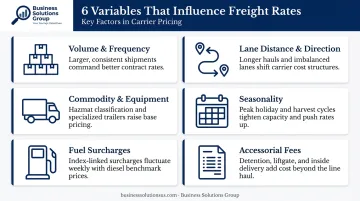
The primary variables that influence what you'll pay:
- Freight volume and shipment frequency — predictable, consistent volume is worth more to a carrier than erratic loads
- Lane distance and direction — backhaul lanes often price lower than headhaul routes
- Commodity type and equipment requirements — specialized equipment commands a premium
- Seasonality — Q4 peak season tightens capacity and pushes rates higher
- Fuel surcharges — carriers like FedEx and UPS publish weekly fuel surcharge updates tied to fuel index formulas
- Accessorial fees — detention, drayage, residential delivery, and liftgate charges can add significantly to total invoice cost
Accessorials and surcharges deserve particular attention. Many shippers focus entirely on the linehaul rate — then get surprised when the invoice lands.
Tips 1–5: Pre-Negotiation Preparation Strategies
Tip 1: Analyze Your Total Freight Spend Before Any Conversation
Start by auditing your freight spend broken down by carrier, lane, mode, and shipment frequency. This data is the foundation of every negotiation that follows.
Carriers use internal profitability metrics to evaluate your account. If you don't know your cost concentration, you're negotiating blind. A complete audit should capture:
- Which lanes generate the highest spend
- Which carriers handle your greatest volumes
- Where shipment frequency creates consistent revenue for a carrier
- Modes where your costs are growing faster than volume
That clarity tells you which lanes to target first and which carrier relationships deserve the most attention.
Cass Information Systems processed 35 million freight invoices valued at $37 billion in freight spend in 2025 — a scale that illustrates how complex freight billing actually is and why systematic auditing matters before any negotiation begins.
Tip 2: Benchmark Your Rates Against Market Data
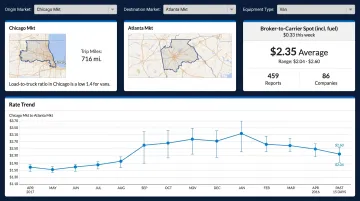
Comparing your current contracted rates against prevailing spot and contract market rates reveals whether specific lanes are overpriced — and by how much.
FreightWaves data shows how dramatically the spot-contract spread can shift: spot rates averaged $0.22 per mile above contract from July 2020 to February 2022, then swung to $0.60 per mile below contract from May 2022 through early 2024. A shipper locked into a contract without benchmarking during that transition left real money on the table.
Tools like DAT RateView provide real-time prevailing rates across lanes. Spend intelligence platforms — including those offered by Business Solutions Group — go further, analyzing your full invoice history against proprietary market-rate databases to pinpoint exactly which lanes are overpriced and by how much. Their benchmarking phase typically takes about a week and produces the data foundation for a credible negotiating position.
Tip 3: Leverage Volume and Commit Strategically
Carriers value predictable revenue. Committing to higher volumes or consolidating shipments on specific lanes to a single carrier creates meaningful leverage — carriers regularly offer rate concessions in exchange for volume guarantees.
J.B. Hunt's dedicated contracts run an average of five years, and Werner renegotiates dedicated contract rates annually. These patterns reflect how seriously carriers take long-term volume relationships.
One caution: avoid over-consolidating purely to create leverage. Concentrating too much freight with a single carrier creates dependency and eliminates alternatives. Instead, consolidate strategically on lanes where a carrier has strong network coverage and demonstrated performance.
Tip 4: Understand the Full Cost — Including Surcharges
Always request a detailed cost breakdown that separates the base linehaul rate from every surcharge and accessorial fee. This includes:
- Fuel surcharges (often indexed to weekly diesel prices)
- Detention and driver wait-time fees
- Drayage and port handling charges
- Residential delivery and liftgate fees
- Mode-specific charges (bunker adjustment factors for ocean, dimensional weight for parcel)
The TIA Model Broker/Carrier Agreement makes clear that surcharges and accessorial charges are only enforceable when specifically agreed to in writing — meaning these are legitimate negotiation items, not fixed costs.
Shippers who focus only on the base rate and ignore surcharges routinely experience invoice totals well above what they expected when the contract was signed.
Tip 5: Build a Carrier-Ready Business Case
Before sitting down with a carrier, prepare a formal business case. Include:
- Current volume data and shipment history
- Lane-specific value to the carrier (favorable lanes, consistent loading windows)
- Growth projections that demonstrate future value
- Reliability metrics (on-time tender acceptance, documentation accuracy)
Business Solutions Group builds this preparation into its negotiation process, analyzing carrier proposals, identifying shortfalls, and coaching clients through counter-offers in a dedicated proposal analysis phase. The goal is framing the engagement as a mutual opportunity rather than a one-sided price demand.
Carriers reserve their best terms for shippers who can demonstrate exactly what their business is worth — and back it up with data.
Tips 6–10: Negotiation Tactics and Relationship Strategies
Tip 6: Time Your Negotiations Strategically
Freight markets are cyclical, and timing your negotiations correctly matters as much as the data you bring.
Cass Transportation Index data shows freight rates declined 7% in 2024 before trending upward in 2025. Shippers who renegotiated during that soft-rate window locked in better terms than those who waited.
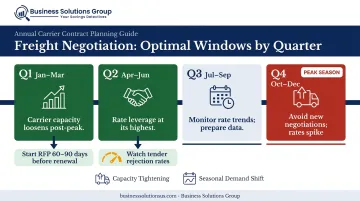
Practical timing guidance:
- Start 60–90 days before contract renewal — enough lead time to run a full RFP and evaluate alternatives
- Avoid Q4 peak season — holiday surges tighten capacity and shift pricing power firmly to carriers
- Watch tender rejection rates as a market signal — rising rejections indicate carriers have alternatives and less motivation to negotiate
- Target Q1 and Q2 when produce season hasn't yet tightened capacity and carriers are motivated to secure consistent business
DAT notes that most shippers run annual RFPs to re-engage incumbent carriers. Those who start that process early in the year consistently have more options.
Tip 7: Diversify Your Carrier Base to Create Competitive Tension
Relying on a single carrier eliminates competitive pressure. When a carrier knows it's your only option, there's little motivation to offer concessions.
Maintaining qualified alternatives on key lanes changes that dynamic. Carriers aware that competitive bids are in play are more likely to sharpen their pricing to protect the relationship — the business case speaks for itself.
A practical approach:
- Vet at least two qualified carriers per primary lane
- Keep those relationships active through consistent communication and occasional freight awards
- Never let a backup carrier sit idle for so long that onboarding them in a crunch becomes its own problem
Tip 8: Negotiate Beyond the Base Rate
Base rates are often the least flexible part of a carrier's offer. These items frequently have more room:
- Fuel surcharge formulas — negotiate index caps or alternative calculation methods
- Accessorial fee schedules — cap detention rates, standardize drayage pricing
- Payment terms — faster payment can unlock rate concessions
- Contract length — shorter terms give flexibility if market rates shift
- Performance guarantees — minimum service levels with defined remedies
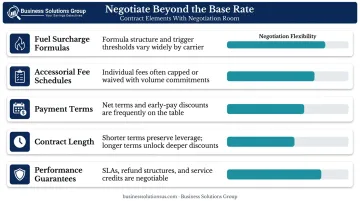
Go into negotiations with a prioritized list of must-haves versus trade-offs. For example, accepting a slightly higher base rate in exchange for capped fuel surcharges can produce lower total cost over the contract period. Most shippers miss this when they fixate on linehaul price alone.
Tip 9: Get All Agreed Terms in Writing
Verbal agreements carry no contractual weight. Every rate, surcharge formula, payment term, and performance expectation must be documented in the final contract before any freight moves.
Review contracts carefully for:
- Auto-escalation provisions — clauses that allow carriers to increase rates unilaterally at set intervals
- Surcharge calculation methods — vague language here can mean dramatically higher costs than expected
- Force majeure language — the TIA model agreement explicitly states that economic hardship does not constitute force majeure, but some carrier contracts define it broadly enough to allow rate changes during market disruptions
Written change control matters too. The TIA standard requires carrier modifications to be initialed to indicate specific acceptance, confirming that the signed contract supersedes any conflicting terms in separate documents.
Tip 10: Build Long-Term Carrier Relationships as a Negotiation Asset
Carriers allocate capacity and preferential pricing to shippers they trust. That trust is built through operational behavior — the way loads are tendered, documented, and paid.
Concrete practices that build carrier preference:
- Pay invoices on time, every time
- Provide accurate load information and documentation
- Honor tender commitments — excessive falloffs damage carrier relationships
- Share 3–6 month volume forecasts to help carriers plan capacity
- Address disputes professionally and promptly
At contract renewal, a shipper known for reliable loads and clean documentation has structural leverage that no amount of benchmark data alone can replicate.
Common Mistakes to Avoid in Freight Rate Negotiation
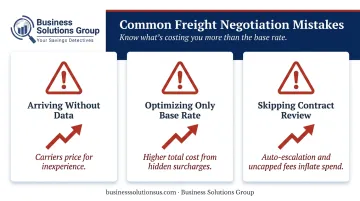
Three patterns consistently undermine otherwise solid negotiations:
- Arriving without data — Carriers know their rate structures better than most shippers. Walking in without market benchmarks or spend analysis signals inexperience, and carriers price accordingly.
- Optimizing only for the base rate — Chasing the lowest linehaul rate while ignoring surcharges and service reliability often produces higher total costs than a slightly pricier alternative. Cass flags lumping accessorial charges with linehaul rates as a specific danger because it obscures true freight costs.
- Skipping the contract review — Auto-escalation clauses, uncapped surcharges, and vague accessorial definitions can significantly inflate costs over the contract term. The rate you negotiate and the rate you ultimately pay can diverge substantially without careful review of the contract language.
Frequently Asked Questions
Can you negotiate freight rates?
Yes — freight rates are negotiable for both spot and contract shipments. Shippers with sufficient volume, market data, and preparation regularly secure rates below initial carrier offers, especially on high-volume lanes where consistent business makes the account worth competing for.
When is the best time to negotiate freight rates?
The optimal window is during periods of softer freight demand, 60–90 days before contract renewal deadlines. Carriers have more available capacity then and a stronger incentive to lock in reliable volume before the market tightens.
What information should you have before negotiating?
At minimum: current freight spend by lane and carrier, prevailing market benchmark rates, shipment volume and frequency data, and a full breakdown of existing surcharges and accessorial fees.
How does freight volume affect rate negotiations?
Higher and more consistent volume increases shipper leverage because carriers prioritize predictable revenue. Volume commitments — particularly on lanes where the carrier has strong coverage — are among the most effective tools for securing rate concessions.
How do you get leverage when negotiating with large carriers?
Leverage comes from three sources: a diversified carrier base that creates credible alternatives, market benchmark data that counters inflated rates, and a track record as a reliable shipper with consistent volume and growth potential.
What are the most common mistakes in freight rate negotiations?
The top three: negotiating without market data, focusing only on the base rate instead of total cost, and skipping contract language review — especially auto-escalation clauses, uncapped surcharges, and loosely defined accessorial fees.